


Introduction
Every time you tap your transit card to board a train, wave your badge to enter a secure building, or watch a retailer instantly count thousands of items in their warehouse, you are witnessing the quiet power of Radio Frequency Identification — better known as RFID. It is one of those technologies that works best when you barely notice it at all.
RFID has been around in various forms since the mid-twentieth century, but over the past two decades it has matured from a niche military and logistics tool into a foundational layer of modern commerce, healthcare, manufacturing, and everyday consumer life. Understanding how it works — and why it matters — reveals just how deeply invisible infrastructure shapes the world around us.
What Is RFID and How Does It Work?
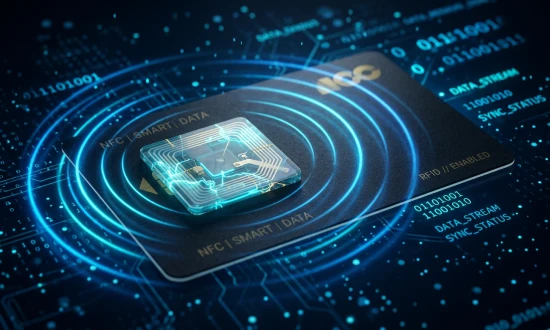
At its core, RFID is a wireless communication technology that uses radio waves to identify and track objects. A complete RFID system consists of three components: a tag, a reader, and a backend software system.
The tag is a small device — sometimes no larger than a grain of rice — that contains a microchip and an antenna. Tags are either passive or active. Passive tags have no internal battery; they harvest energy from the radio waves emitted by a reader and use that energy to transmit their stored data back. Active tags carry their own power source and can broadcast signals over much greater distances, sometimes hundreds of meters.
The reader emits radio frequency energy and listens for responses. When a tag enters the reader’s electromagnetic field, it wakes up, processes the signal, and responds with the information stored on its chip — typically a unique identifier code.
The backend system receives this identifier and looks it up in a database, connecting a string of digits to a real-world object: a product on a shelf, a patient’s medical record, a vehicle crossing a toll gate, or a pallet moving through a distribution center.
RFID operates across several frequency bands. Low-frequency (LF) systems around 125–134 kHz are common in animal tracking and key fobs. High-frequency (HF) systems at 13.56 MHz power contactless payment cards and library book tracking. Ultra-high-frequency (UHF) systems, ranging from 860 to 960 MHz, dominate retail and supply chain logistics due to their ability to read dozens of tags simultaneously at distances of several meters.
A Brief History
The conceptual roots of RFID trace back to World War II, when the British Royal Air Force developed Identification Friend or Foe (IFF) transponders to distinguish allied aircraft from enemy planes. These early systems worked on the same fundamental principle: a transmitter sends a signal, and a transponder responds with an identifying code.
The first true RFID patent is widely credited to Mario Cardullo, who filed it in 1973, though researcher Charles Walton also received key patents around the same period. For decades, RFID remained expensive and niche, used primarily by governments and large industrial operators.
The technology’s commercial turning point came in the early 2000s when Walmart mandated that its top suppliers attach RFID tags to pallets and cases. This single retail directive — combined with the standardization work of EPCglobal and later GS1 — drove tag prices from several dollars to just a few cents, opening the door to mass adoption.
Where RFID Is Making a Real Difference
Retail and Supply Chain
Modern retail would look unrecognizable without RFID. Major apparel brands use item-level tagging to achieve inventory accuracy rates above 95%, compared to roughly 65% with traditional barcode scanning. When every garment on every rack carries a unique RFID tag, staff can count thousands of items in minutes by simply walking through a store with a handheld reader. This reduces stockouts, minimizes shrinkage, and enables the seamless omnichannel fulfillment that customers now expect.
In the broader supply chain, RFID provides real-time visibility as goods move from factory floor to shipping dock to distribution center to store. This transparency is not merely convenient — it is increasingly essential for regulatory compliance, food safety traceability, and responding rapidly to disruptions.
Healthcare
In hospitals, RFID is literally saving lives. Tags attached to surgical instruments help ensure that nothing is accidentally left inside a patient during an operation. Medication dispensing systems use RFID to verify that the right drug, in the right dose, is given to the right patient. Asset tracking keeps expensive equipment like infusion pumps and ventilators visible across large facilities, reducing the time nurses spend searching for critical devices.
Patient wristbands embedded with RFID chips link individuals to their records and prescribed treatments, reducing identity errors during procedures and emergency situations.
Transportation and Access Control
Contactless smart cards on transit systems across the world depend on HF RFID. Highway toll systems use UHF readers mounted above lanes to charge vehicles automatically as they pass at highway speeds. In access control, RFID badges have largely replaced mechanical keys in commercial buildings, hospitals, and government facilities, providing not just entry control but an auditable record of who entered which room and when.
Agriculture and Animal Tracking
Livestock management has embraced RFID to track individual animals from birth to slaughter, supporting food safety regulations and disease outbreak response. Tiny injectable RFID transponders allow lost pets to be reunited with their owners — a simple, passive chip that requires no battery and can last the lifetime of the animal. Precision agriculture operations use RFID to track equipment and monitor individual plants in high-value greenhouse operations.
Privacy and Security Considerations
The same capabilities that make RFID powerful also raise legitimate concerns. Passive UHF tags can be read without the knowledge of the person or object being tracked. In retail, consumer advocates have long called for clear disclosure when products carry embedded RFID tags and for mechanisms to deactivate tags at point of sale.
Security researchers have demonstrated that many RFID systems — especially older implementations — are vulnerable to cloning and replay attacks. Modern systems address this through cryptographic authentication, mutual verification between tag and reader, and rolling codes that change with each transaction, making replay attacks ineffective.
The Road Ahead
Several trends are pushing RFID into new territory. The integration of RFID with Internet of Things (IoT) platforms is creating environments where objects not only identify themselves but continuously report their condition, location, and context. Sensor-enabled RFID tags that can monitor temperature, humidity, shock, and light exposure are transforming cold-chain logistics and pharmaceutical distribution.
Printable RFID antennas, manufactured using conductive inks on flexible substrates, are driving tag costs toward fractions of a cent and enabling integration into packaging, labels, and even fabric. Industry analysts project the global RFID market will surpass $35 billion by the end of this decade. As artificial intelligence and machine learning are layered on top of RFID data streams, the technology’s ability to generate actionable insight will only deepen.
Conclusion
RFID is a technology that operates at its best in the background, silently doing the work of connecting the physical world to the digital one. From the tag on a sweater in a fast-fashion chain to the transponder that identifies a surgical instrument in an operating room, it represents one of the most consequential and underappreciated infrastructure layers of modern life. As costs continue to fall and capabilities continue to rise, the invisible thread of RFID will only weave itself more deeply into the fabric of how we move, work, heal, and trade.